Becoming a PT
Changing Career to Personal Trainer in Scotland: A Realistic Plan
You can change career to personal training in Scotland by gaining a CIMSPA-endorsed Level 2 and Level 3 qualification, which most people complete in 10–16 weeks alongside their current job. Most career changers keep their existing income while they study, then take on part-time or employed gym work before going fully self-employed.
The short answer
Is personal training a realistic career change in Scotland?
Yes. Personal training is one of the few qualified careers you can move into in a matter of weeks rather than years, and the qualification you need is taught to complete beginners. You don't need a sports degree or a fitness-industry background. What you need is a recognised Level 2 and Level 3 qualification, a plan for your income while you build a client base, and the willingness to learn the business side as well as the coaching.
People come into the job from all sorts of places. My World of Work, Skills Development Scotland's careers service, lists professional sport and the armed forces as common routes in. Our own course is built for career changers and working adults, and needs no previous fitness qualification. Life experience helps: a new client who's nervous about the gym often relates more easily to a trainer who has also had a desk job, a family and a busy week.
Where the work is in Scotland
Most PT work in Scotland sits in the central belt, around Edinburgh and Glasgow, with more in Aberdeen, Dundee and Inverness. National gym chains such as PureGym, The Gym Group, Nuffield Health and David Lloyd operate here, alongside independent gyms and private studios. You can also train clients outdoors, in their homes or online, so where you live doesn't cap the career as much as it used to.
Qualifications
What qualifications do you need to switch careers into personal training?
You need a Level 2 Gym Instructor qualification and a Level 3 Personal Training qualification, usually sold together as a personal training diploma. Level 2 lets you work on the gym floor and run inductions. Level 3 is what lets you screen clients, write programmes and train people one-to-one for a fee.
Check two things before you pay for any course. The qualification should be regulated by Ofqual and awarded by a recognised awarding body, and it should be endorsed by CIMSPA, the professional body for the UK sport and physical activity sector. Gyms and insurers check for both. For the full list, see what qualifications you need to be a personal trainer.
Are English-regulated qualifications valid in Scotland?
Yes. Most UK personal training qualifications are regulated by Ofqual in England, and gyms and insurers across Scotland accept them in the same way. For comparison, a Level 3 qualification on the English framework sits at roughly SCQF level 6–7 on the Scottish Credit and Qualifications Framework, around the level of Highers and Advanced Highers. You don't need a separate Scottish version of the qualification.
What else you'll need before you train clients
Beyond the qualification, you'll need a first aid certificate that includes CPR, plus public liability and professional indemnity insurance. If you plan to work with children or protected adults, for example in a school, a club or a care setting, you'll also need to join Disclosure Scotland's PVG scheme. It costs £59 to join and your membership lasts 5 years, and it has been mandatory for regulated roles since 1 April 2025.
Timeline
How long does a career change into personal training take?
The qualification itself takes anywhere from 4 weeks to 12 months, depending on how you study. Most working adults choose a part-time, blended or online format and qualify in 10–16 weeks without leaving their job. Full-time intensive courses are quicker, but they usually mean taking several weeks off work.
| Study format | Typical length | Can you keep your job? | Best for |
|---|---|---|---|
| Full-time intensive | About 4 weeks, Monday to Friday | Only with time off or leave | People between jobs or with savings to cover a month |
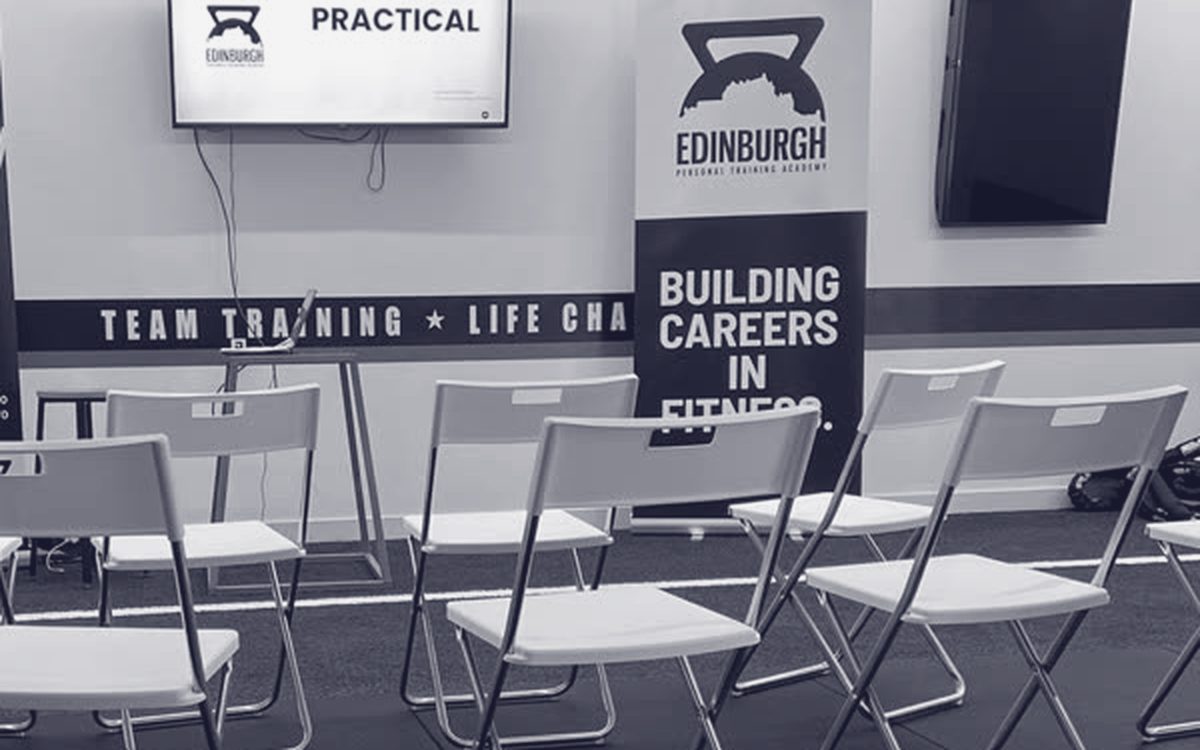
| Blended (online theory plus in-person practice) | 8–16 weeks, e.g. 10 weeks at Edinburgh PT Academy | Yes | Beginners who want supervised coaching practice |
| Online-only, self-paced | 8–16 weeks is common, with up to 12 months' access | Yes | Self-motivated learners who already have gym access and a volunteer client |
| College course | One or two academic years | Sometimes, if part-time | School leavers and people who want a wider sport qualification |
Course lengths as advertised by UK providers, checked 29 September 2026.
The qualification is only part of the timeline. Building enough regular clients to replace a full-time salary usually takes longer than the course itself. That's why the order you do things in matters more than how fast you qualify.
The plan
How do you change career to personal trainer without losing your income?
The safest way to switch is in stages: study while you're still employed, start coaching part-time, and only leave your current job once your PT income is reliable. Here's the five-stage plan we suggest to career changers on our course.
- Test the idea (2–4 weeks). Spend time in gyms at the hours PTs actually work: early mornings, evenings and Saturdays. Talk to two or three working trainers about their week. If those hours don't fit your life, you want to know now.
- Qualify while employed (10–16 weeks). Choose a part-time, blended or online course you can fit around your job. Most combined Level 2 and Level 3 courses are designed for exactly this.
- Start part-time (3–6 months). Take a few hours a week of employed gym work, or train a handful of clients in the evenings and at weekends. This is where you learn to sell sessions and keep clients, not just coach them.
- Choose your main route. Decide between employed, self-employed or a mix, based on what your first months actually taught you (see the next section).
- Hand in your notice when the numbers work. A sensible test is a few months of steady PT income, plus savings to cover quieter weeks.
Stage lengths are rough guides, not rules. Some people move through them faster, especially if they already coach friends or teammates informally.
Employed or self-employed
Should you be an employed or self-employed PT after a career change?
Employed roles suit most career changers at first, because they pay a regular wage and put you in front of gym members from day one. Self-employed work pays more per session but depends entirely on how many clients you find and keep. Many new trainers do both for a while.
Working as an employed personal trainer
An employed PT follows the gym's rota, is paid a salary or hourly rate, and often gets commission or a share of session fees on top. Gym duties such as inductions, floor walks and classes usually come with the job. Insurance is often covered by the employer, and you get holiday pay and structure while you learn the job.
Going self-employed in Scotland
Most self-employed PTs start as sole traders. You register as self-employed with HMRC, not Companies House, and the deadline is 5 October after the end of the tax year in which you started. You then file a Self Assessment tax return each year. Scotland sets its own income tax bands, so check the Scottish rates rather than using an England-based calculator. Self-employed trainers usually rent space in a gym or studio, train clients outdoors or at home, or coach online, and they pay for their own insurance.
Earnings
How much can you earn after changing career to personal trainer?
Expect to earn less in your first year than an established trainer. UK providers quote starting salaries for employed PTs of around £20,000–£28,000, rising with experience and commission. Self-employed income depends on how many sessions you sell each week, not on your qualification.
As an example of published figures, Active Careers quotes a basic employed salary of around £24,000 outside London, about £34,000 with commission, and typical freelance rates of around £35 an hour outside London. These are UK-wide figures from course providers, not official Scottish statistics, so treat them as a rough guide. Our personal trainer salary guide explains what actually moves the number: client retention, specialism, location and business skills.
The useful question for a career changer isn't "what's the average PT salary?" It's "how many sessions a week do I need to match my current take-home pay, and how long will it take me to get there?" Work that out before you hand in your notice.
Funding
How can you pay for a personal trainer course in Scotland?
Most career changers in Scotland pay for their course themselves, either in full or through an interest-free instalment plan. Some government funding options you'll see in UK guides don't apply here, so check anything you read before you plan around it.
Advanced Learner Loans don't cover Scottish courses
Many UK career-change guides mention Advanced Learner Loans. According to GOV.UK, these loans are for courses at colleges or training providers in England, so they won't pay for a course with a Scottish provider such as ours.
Individual Training Accounts (ITAs)
Skills Development Scotland's Individual Training Accounts have offered up to £200 a year towards an eligible course for Scottish residents who are unemployed or earning less than £22,000 a year. Funding opens and closes in rounds and has been suspended at times, so check its current status on My World of Work before you rely on it. Your course provider also has to be approved to accept ITAs.
Instalment plans
Most providers offer interest-free monthly payments. At Edinburgh PT Academy, the course costs £1,850 all-inclusive, paid in full or as three interest-free monthly payments of £616.67 through Klarna. See our PT course cost guide for what drives prices up or down across the UK.
Honest expectations
What do career changers find hardest about becoming a PT?
Most career changers find the business side harder than the coaching. Finding clients, selling sessions and handling an uneven income in the first year are what cause people to give up, not the anatomy exams.
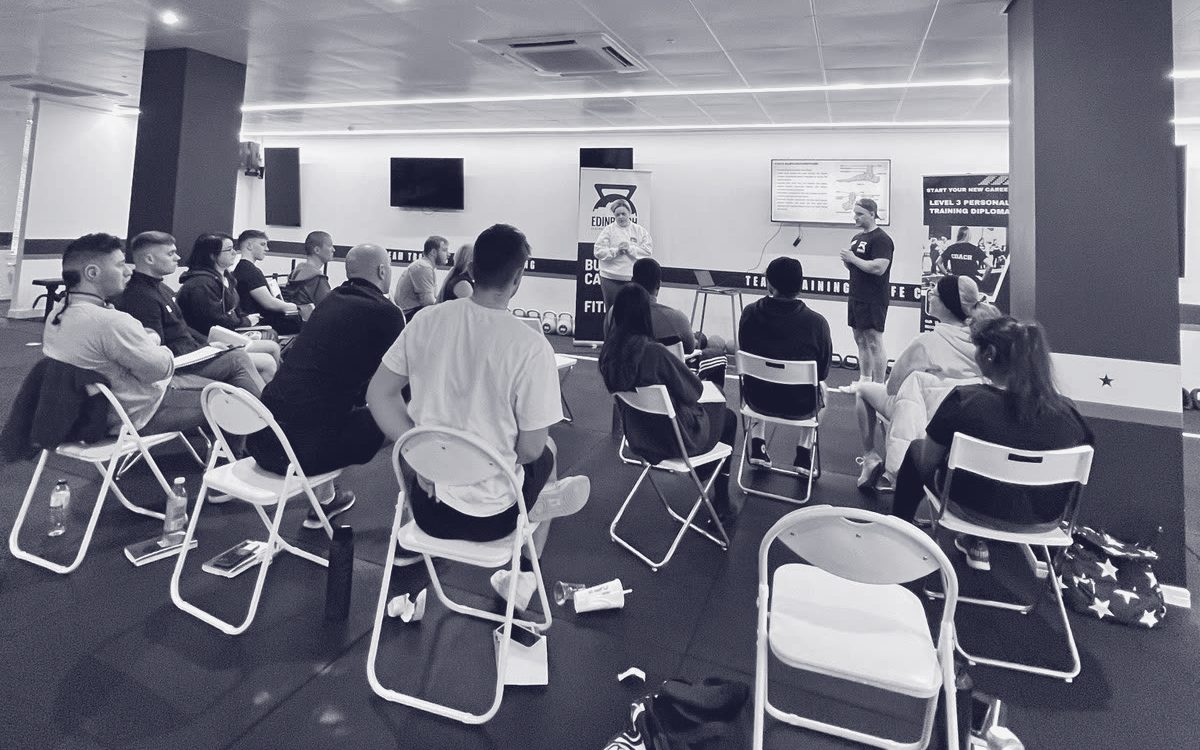
The working hours surprise people too. Clients want sessions before work, after work and at weekends, so a PT's busiest hours are usually early mornings and evenings. The other big hurdle is confidence: coaching a nervous stranger feels very different from training yourself. That's why supervised practice matters so much. On our course, a tutor watches you coach and corrects you during 40 hours of in-person gym sessions, so your first real client isn't the first person you've ever coached. You can see how that works in a week on the course.
Frequently asked questions
Am I too old to become a personal trainer?
No. Many people move into personal training in their 30s, 40s and 50s. You need reasonable fitness to take part in practical sessions, and life experience often helps you relate to clients.
Can I become a personal trainer with no experience?
Yes. Combined Level 2 and Level 3 courses are built for complete beginners. You don't need previous coaching experience or a fitness qualification to enrol.
Can I study to be a PT while working full-time?
Yes. Part-time, blended and online courses are designed for people with full-time jobs. Plan for several hours of study a week on top of any in-person sessions.
Is personal training a good second career?
It can be, if you enjoy working with people and are prepared to build a client base. It suits people who like variety and don't mind early, late and weekend hours.
Do I need a degree to be a personal trainer in Scotland?
No. A regulated Level 3 personal training qualification is the standard requirement. A sports science degree is optional and not needed to work in UK gyms.
Do personal trainers in Scotland need a PVG check?
Only if you work with children or protected adults in a regulated role. PVG membership costs £59 to join and lasts 5 years.
Can I get funding for a PT course in Scotland?
Sometimes. Skills Development Scotland's Individual Training Accounts have offered up to £200 to eligible people when funding is open. Advanced Learner Loans only cover courses in England.
Should I quit my job before retraining as a PT?
Usually not. Most career changers qualify while employed, start coaching part-time, and leave their job only once their PT income is reliable.
How many clients do I need to go full-time as a PT?
It depends on your prices and your current take-home pay. Work out how many paid sessions a week would match your income, then build towards that number before you leave your job.
Can I work as a PT part-time alongside another job?
Yes. Many trainers work a few hours a week in a gym or coach private clients in the evenings and at weekends, and some keep it that way permanently.
Related reading
Keep exploring
Career guide
Personal Trainer Salary in Scotland
What employed and self-employed PTs realistically earn.
Checklist
What Qualifications Do You Need to Be a Personal Trainer?
Level 2, Level 3, insurance, first aid and PVG.
Course guide
What to Expect on a Personal Trainer Course
Content, assessments and weekly time, before you enrol.