
How Much Does a Personal Trainer Course Cost?
UK price ranges and what drives the cost up or down.
Course guides
Not a syllabus document — a real look at what one week actually feels like as a student, using Week 2's screening stations as the example.
By Ewa, Course Tutor · Published 15 September 2026 · 5 min read
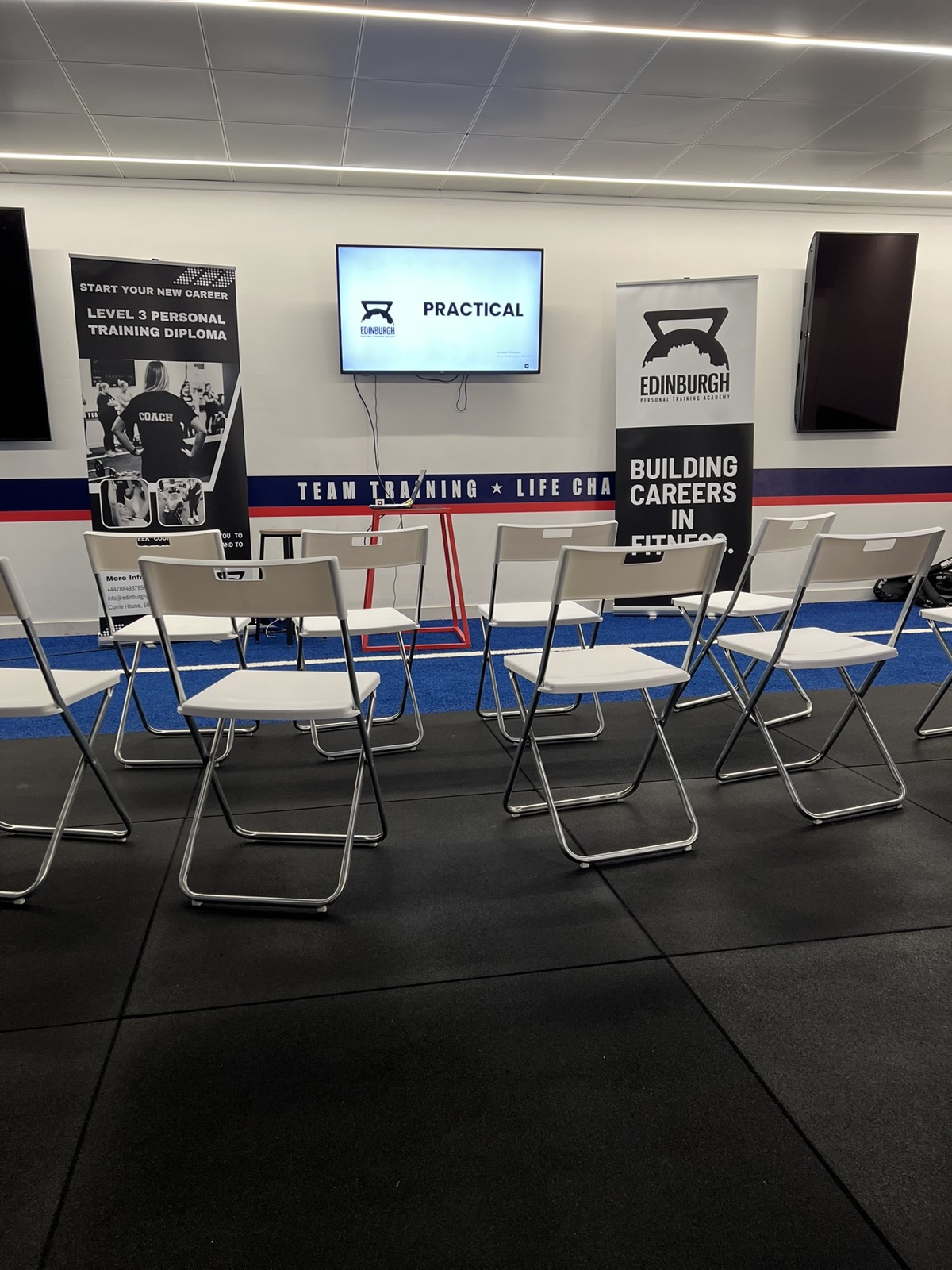
Before the room
By the time students walk into the gym for Week 2's practical session, they've already worked through the online theory for movement screening on the AITP Student Hub — what each screen is checking for, common findings, and why it matters before you ever put a client through a training programme. The in-person session isn't where the information is delivered for the first time; it's where it gets tested against a real person in front of you.
In the room
Week 2 is built around 10 screening stations covering posture, squat pattern, shoulder mobility, hip hinge, balance, core control and basic cardiovascular findings. Students rotate through each one in pairs, taking turns being the "coach" and the "client," while a tutor moves between stations watching how each student actually explains what they're seeing — not just whether they can spot a limitation, but whether they can communicate it clearly to someone who isn't a fitness professional.
That communication piece is usually where the real learning happens. Recognising an anterior pelvic tilt from a textbook diagram is one thing; explaining it to a nervous new client in a way that doesn't sound alarming or overly clinical is a different skill entirely, and it's one you can only really build by doing it, getting corrected, and doing it again.
Getting it wrong, safely
Students get things wrong during screening practice regularly — that's expected, and it's exactly why it happens here first. Missing a finding, misreading a movement, or fumbling the explanation in a practice session with a fellow student and a tutor watching is how you build the judgement to catch it with an actual paying client later. It's a lower-stakes place to be corrected than a first session with someone who's nervous about starting a fitness journey and looking to you for confidence.
After the session
The screening findings from Week 2 feed directly into Week 3's programme design work — the 9-step framework students use to turn a client's goals and screening results into an actual training plan. Nothing in the course sits in isolation; each week's practical work is the raw material the next week builds on. See the full 10-week syllabus for how every phase connects.
Related reading
UK price ranges and what drives the cost up or down.
The complete path from deciding to enrolling.