
Course guides
How Long Is a Personal Trainer Course? Real UK Timelines by Route
A UK personal trainer course takes between 2 and 16 weeks for most people. A combined Level 2 and 3 diploma takes about 4 weeks full-time, 10–12 weeks part-time or blended, and around 16 weeks online. If you already hold Level 2, a fast-track Level 3 can take 2–8 weeks.

By route
How long does each type of personal trainer course take?
How long your course takes depends mostly on how you study, not on the qualification itself. The same Level 2 and 3 diploma can take 4 weeks full-time or 16 weeks online, because the course content is the same and only the weekly pace changes.
| Route | Level 2 & 3 diploma | Level 3 only (Level 2 held) | Who it suits |
|---|---|---|---|
| Full-time intensive | About 4 weeks | About 2 weeks | People who can stop work, Monday to Friday, 9am–5pm |
| Weekend fast track | About 8 weeks | Three weekends | Weekday workers who can give up weekends |
| Part-time or blended | 10–12 weeks | 5–6 weeks | Career changers who need guided practice |
| Online, self-paced | About 16 weeks, with up to 12 months allowed | About 8 weeks | Self-motivated learners with their own gym access |
| College HNC | About 1 year full-time | Not applicable | School leavers who want a wider sport qualification |
Typical durations advertised by UK providers including OriGym, Train Fitness and Fitness Training Scotland, October 2026. Individual providers vary.
Level by level
How long do Level 2 and Level 3 take on their own?
On its own, Level 2 Gym Instructor takes about 2 weeks full-time or 4–8 weeks part-time. Level 3 Personal Training takes about 2 weeks full-time or 5–8 weeks part-time and online. You need both to work as a personal trainer, and Level 3 builds directly on Level 2.
Booking the two levels separately usually takes longer than the weeks above suggest, because there is often a gap while you wait for results and the next course date. A combined diploma removes that gap. If you're unsure which level you need, read Level 2 vs Level 3 personal training or our Level 2 gym instructor course guide.
Study hours
How many study hours does a personal trainer course need?
Behind every timeline is a fixed number of study hours. One Ofqual-regulated Level 3 Diploma in Personal Training lists 184 guided learning hours and 414 hours of total qualification time. An Active IQ Level 2 gym instructing certificate listed 132 guided hours and 242 hours in total.
Guided learning hours are the time you spend with a tutor, in person or live online. Total qualification time adds your self-study, coursework and revision. That's why fast courses work: the tutor time is packed into a few weeks, and the self-study is done before and after. One UK provider estimates 6–10 hours a week of study for Level 2 and 10–15 hours a week for Level 3 when you study part-time.
Work out your own timeline
- Count your free hours. Be honest about the hours you can study each week once work, family and training are covered.
- Ask for the self-study hours. Ask each provider how many hours of e-learning and coursework sit outside the taught sessions, and whether any must be finished before day one.
- Divide and add a buffer. Divide those hours by your weekly hours, then add two or three weeks for marking, resits and life getting in the way.
Fast track
Can you do a fast-track Level 3 personal trainer course?
Yes, but a fast-track Level 3 course is mainly for people who already hold a Level 2 qualification. With Level 2 done, a full-time Level 3 can take about 2 weeks, and weekend formats such as Fitness Training Scotland's run over three consecutive weekends.
Fast track has two costs. The first is pre-course study: many fast-track courses expect you to finish a large share of the e-learning before the first practical day. The second is practice time. A short course gives you fewer supervised hours coaching real people, and that's the skill new trainers say they lacked most. In a survey by Future Fit Training, 73% of employers said a PT qualification should take no less than 6 months. That's a strong view, but it shows employers care how well you can coach, not only how quickly you qualified.
Your pace
What makes a personal trainer course take longer or shorter?
Five things decide whether you finish early or late.
- Your starting knowledge. A sports science background or existing Level 2 shortens the theory.
- Your weekly hours. Ten hours a week finishes a course twice as fast as five.
- Course dates. Workshops and assessments that run only on certain weekends can leave gaps of several weeks.
- Marking and resits. Slow coursework marking or a paid resit can add weeks. Ask about both before you enrol.
- Fixed or flexible structure. Online courses with 12 months' access are flexible, but many students take longer than they planned. Courses with fixed weekly sessions keep you on schedule.
Our course
How long is the Edinburgh PT Academy course?
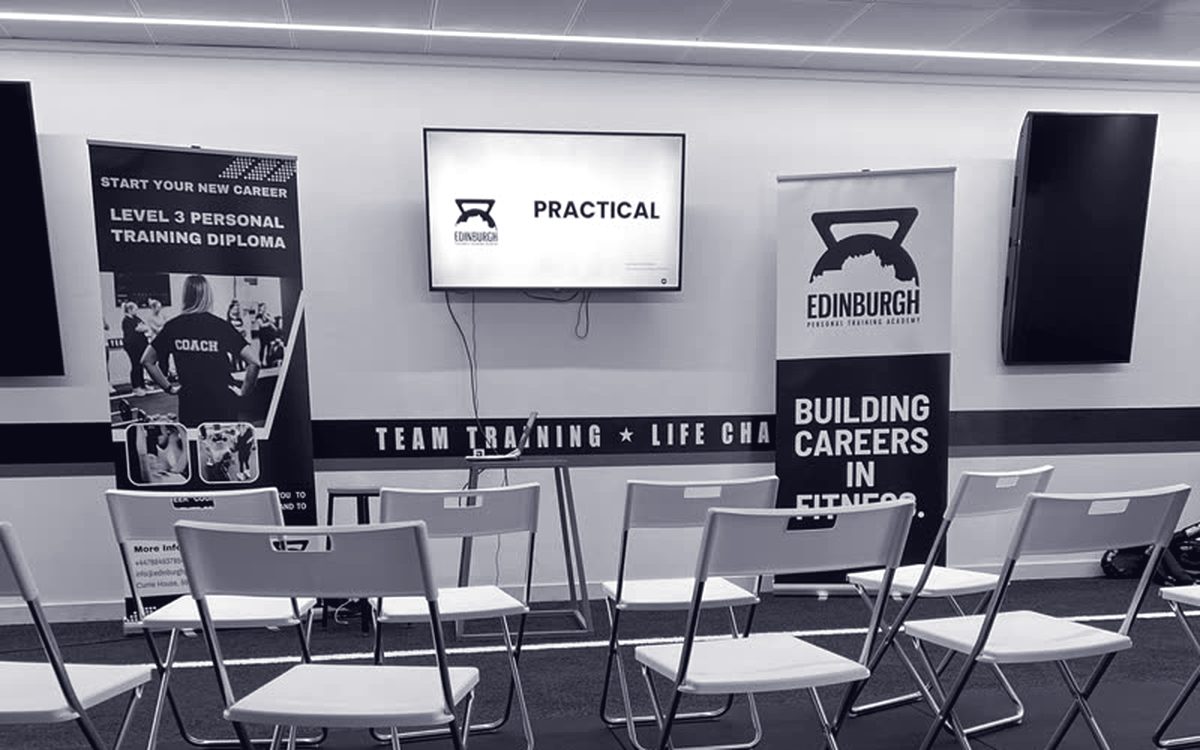
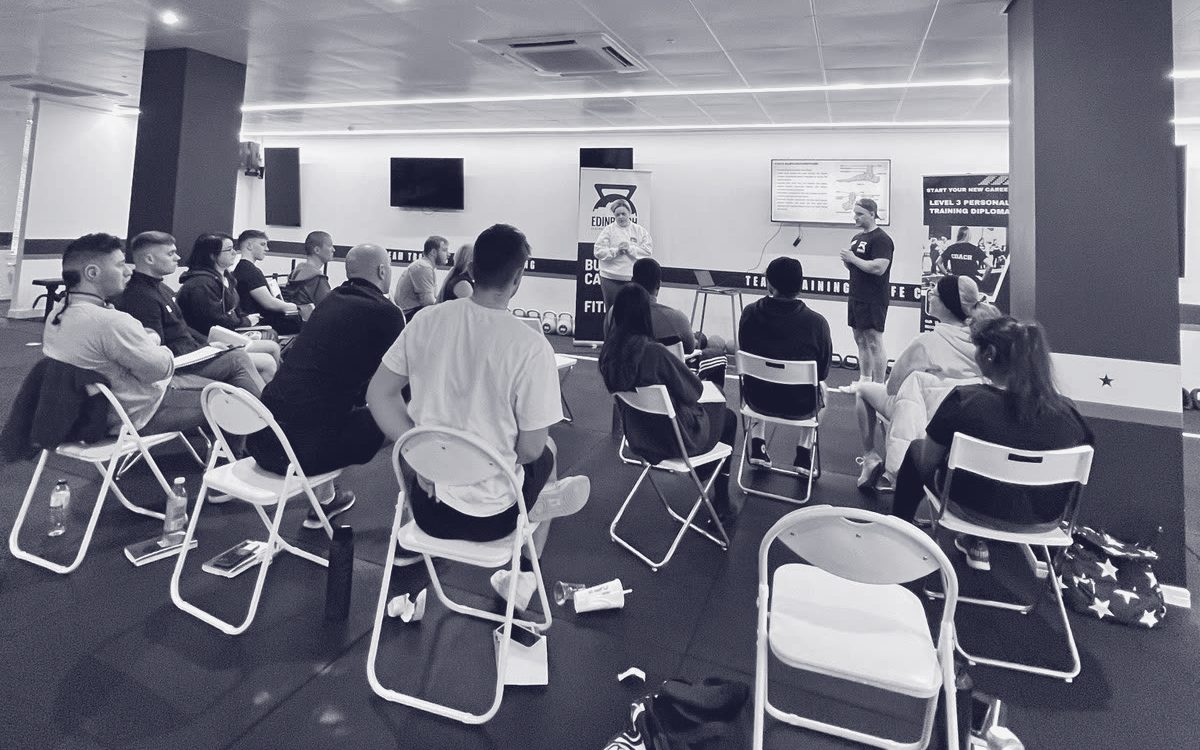
Our personal trainer course in Edinburgh takes 10 weeks from start to qualification, covering Level 2 and Level 3 together. It includes 40 hours of in-person gym sessions at Gorgie Road, with the theory studied online between sessions.
The 10 weeks run in three phases: foundations, screening and programme design in Weeks 1–4, applied coaching and business setup in Weeks 5–7, and lower-body coaching, energy systems and training methods in Weeks 8–10. Cohorts are capped at 8–12 students, so the pace is set for the group, not left to you alone. The 10-week syllabus lists every week.
After you pass
How long until you can work as a personal trainer?
You can start working as soon as you receive your Level 3 certificate and arrange PT insurance and a first aid certificate that includes CPR. Getting employed in a gym can take a few weeks after that, and building a full self-employed client list usually takes a few months.
The fastest starts usually come from planning during the course: arranging gym-floor shadowing, talking to gyms about renting space, and preparing your pricing before you qualify. If you're changing career, our career change guide sets out how to do that without a gap in income.
Frequently asked questions
What is the fastest way to become a personal trainer in the UK?
The fastest route is a full-time intensive course, which can take you from no qualifications to Level 3 in about 4 weeks. You will need to study Monday to Friday and complete pre-course e-learning.
Can I become a personal trainer in under a month?
Yes, through a full-time intensive diploma or, if you already hold Level 2, a 2-week full-time Level 3 course. Expect long days and little practice time outside the course.
How long does Level 3 take if I already have Level 2?
About 2 weeks full-time, three weekends on a weekend fast track, or 5–8 weeks part-time or online. Send your Level 2 certificate to the provider when you apply.
How long do online personal trainer courses give you to finish?
Most online providers give you up to 12 months of access. Many learners finish an online diploma in about 16 weeks.
Is a longer personal trainer course better?
Not always, but longer courses usually include more supervised coaching practice. Check how many hours you will spend coaching real people with a tutor watching, not just the number of weeks.
How many hours a week should I study for a PT course?
Part-time learners usually study 6–10 hours a week for Level 2 and 10–15 hours a week for Level 3. On a blended course, in-person sessions are on top of this.
How long does it take with a sports science degree?
A degree can speed up the theory, but you still need a regulated Level 2 and Level 3 to work as a PT in UK gyms. Expect the shorter end of each timeline.
How long is the Level 3 Diploma in Personal Training in hours?
One Ofqual-regulated Level 3 Diploma lists 184 guided learning hours and 414 hours of total qualification time. Other awarding bodies' figures are similar.
Do personal trainer qualifications expire?
No. Level 2 and Level 3 qualifications don't expire. CIMSPA membership is renewed each year and asks for ongoing CPD.
How long does it take to find a job after qualifying?
Employed gym roles can come within a few weeks of qualifying. Building a full client list as a self-employed PT usually takes a few months.
Related reading
Keep exploring
Course guide
What to Expect on a Personal Trainer Course
What you'll study, how you're assessed and the weekly time it takes.
Comparison
Online Personal Trainer Courses in the UK
What online-only courses do well, and where they fall short.