Course format
Online Personal Trainer Courses in the UK: How They Work and What You Get
Yes, you can gain a recognised personal trainer qualification online in the UK. Online Level 2 and Level 3 courses teach theory on screen and assess your practical skills through filmed sessions with a volunteer client. They cost less and give you up to 12 months, but include little or no supervised coaching.

The short answer
Can you become a personal trainer with an online course?
Yes. An online Level 2 and Level 3 course can lead to the same qualification as a classroom course, as long as it's CIMSPA-endorsed and awarded by a recognised, Ofqual-regulated awarding body. The certificate doesn't say how you studied for it. What changes is how you learn and practise the coaching itself.
UK providers sell three formats under the "online" label. Online-only courses put all the theory on screen and have you film your practical assessments. Blended courses put the theory online and teach the practical side in person with a tutor. Attended courses teach almost everything in a classroom and gym. Check which one you're buying, because two courses both called "online" can differ a lot.
Assessment
How are online personal trainer courses assessed?
Online PT courses assess you in three ways: online exams, written coursework and filmed practical sessions. The theory is usually tested with multiple-choice exams you sit online. Coursework typically includes a gym session plan, a progressive training programme, a nutrition plan, a business and marketing plan, and a professional discussion with an assessor.
How the practical assessment works online
For the practical, you go to a gym with a friend or family member acting as your client, film yourself delivering a gym session and a personal training session, and upload the footage for your tutor to mark. A phone or tablet is enough. Providers require you and your client to stay in view of the camera and be clearly heard throughout. Some providers let you choose between submitting video and attending an assessment venue.
Side by side
Online-only vs blended vs in-person PT courses
| Online-only | Blended | Attended / in-person | |
|---|---|---|---|
| Theory | Self-paced online | Self-paced online | Classroom, timetabled |
| Practical teaching | Videos and demonstrations | In-person sessions with a tutor | In-person sessions with a tutor |
| Practical assessment | Filmed session with a volunteer client | Observed live by a tutor | Observed live by a tutor |
| Who finds the gym and the client? | You do | The provider | The provider |
| Typical time allowed | Up to 12 months, self-paced | Fixed course, e.g. 10 weeks | Fixed course |
| Example advertised price | HFE online: £1,165 paid in full | Edinburgh PT Academy: £1,850 all-inclusive | HFE attended: £1,705.25 |
Example prices as advertised on each provider's website, checked 28 September 2026.
Cost
How much does an online personal trainer course cost in the UK?
Online-only packages are usually the cheapest recognised route. As of September 2026, HFE lists its online Level 2 and Level 3 package at £1,165 paid in full, discounted from £1,295, or £76 a month on an interest-free plan.
The same provider shows where the saving comes from. HFE's attended version of the same core package is £1,705.25, around £540 more than the online one. That difference pays for tutor time, gym space and live practical sessions. You're not paying for a different certificate. Our PT course cost breakdown covers the other factors that change the price.
Timeline
How long does an online PT course take?
Online PT courses are self-paced within a fixed access period, commonly up to 12 months. HFE, for instance, gives online learners up to 12 months with extensions available. It quotes 10–12 weeks as the average completion time for its core package.
Self-paced sounds easier, but it puts the deadline on you. A fixed-length blended course, such as Edinburgh PT Academy's 10 weeks, gives you a timetable and a group to keep pace with. Before you pay, ask whether extensions beyond the access period cost extra.
The trade-off
What can't an online PT course teach you?
An online course can't give you live correction. When you film a session with a friend, nobody stops you mid-cue to fix your positioning, point out what you missed in a movement screen or show you a better way to explain a lift. You find out about your mistakes afterwards, if the marker comments on them.
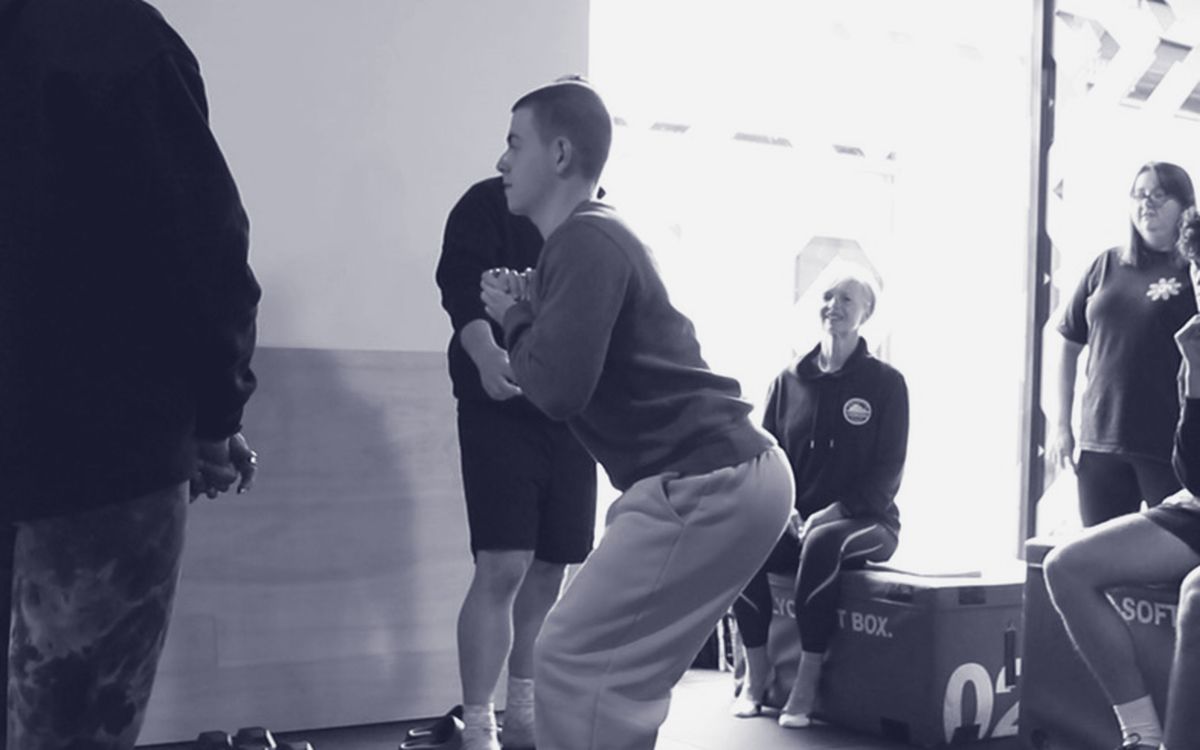
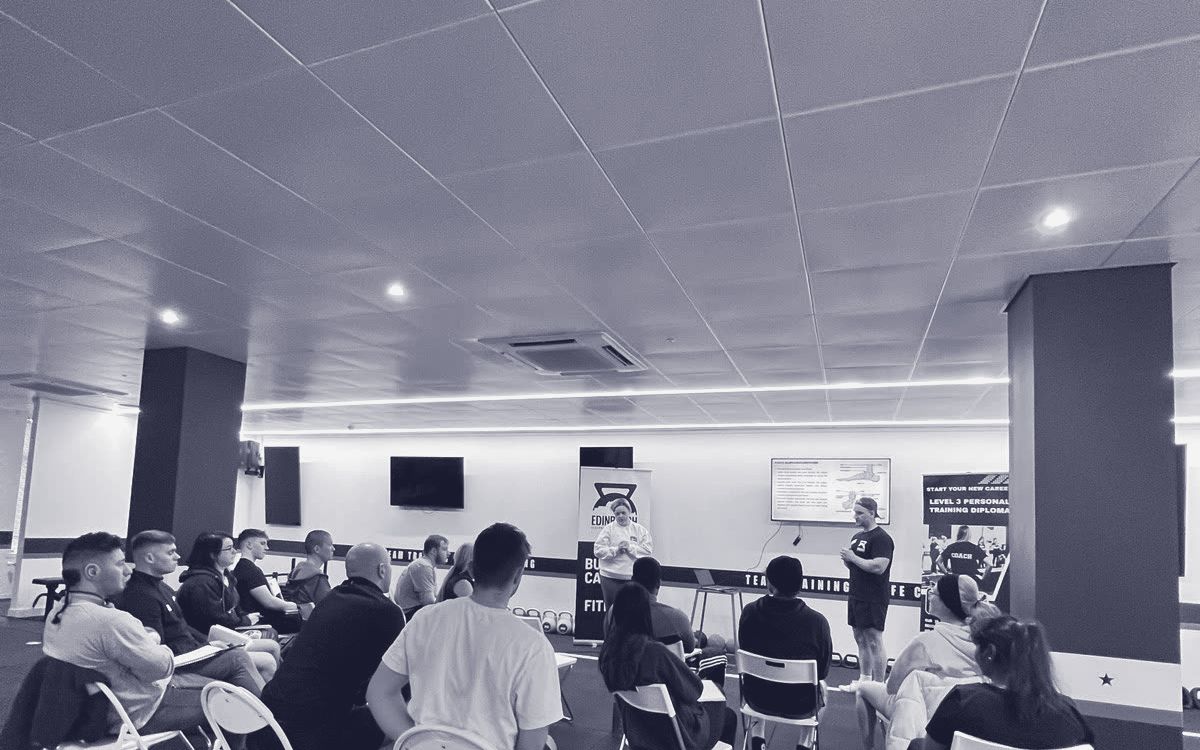
Your practice client is also usually someone who knows you and is happy to go along with you, which is very different from a nervous new client. We cover this in more depth in how to become a personal trainer, and you can see what supervised practice looks like in a week on our course.
Honest fit
Who is an online personal trainer course right for?
An online-only course suits people who already coach or train others informally, have regular access to a gym and a willing volunteer, and need the lowest price or the most flexible timetable. It also suits people who live far from any course venue, for example in rural Scotland.
A blended course is usually the better choice if you're changing career, have never coached anyone, or want to feel ready for your first paying client on the day you qualify. You still get flexible online theory, but a tutor watches you coach and corrects you before you're assessed. That's how our blended course in Edinburgh is built.
Before you buy
What should you check before buying an online PT course?
- CIMSPA endorsement and the awarding body. Get the exact qualification title and check it on the CIMSPA Careers Hub.
- How practicals are assessed. Is it filmed, live at a venue, or your choice? If there's a venue, where is the nearest one to you?
- Resit costs. Some providers include unlimited resits; others charge per attempt.
- The access period. How long you get, and what an extension costs.
- Tutor support. Whether it's live chat, scheduled calls or email, and how quickly they reply.
- What you have to provide yourself. A gym, a volunteer client and recording equipment are usually on you.
Frequently asked questions
Is an online personal trainer qualification recognised by UK gyms?
Yes, if it's CIMSPA-endorsed and awarded by a recognised awarding body. Gyms check the qualification and its endorsement, not whether you studied online or in person.
Can I do Level 2 and Level 3 personal training fully online?
Yes. Several UK providers deliver both levels online, including the practical assessments, which you complete by filming sessions in a gym with a volunteer client.
How do I do my practical assessment on an online PT course?
You film yourself delivering a gym session and a personal training session to a friend or family member acting as your client, then upload the video for marking. Some providers also let you attend an assessment venue instead.
Do I need access to a gym for an online PT course?
Yes, for the practical assessments. Online-only providers generally expect you to arrange your own gym access and your own volunteer client, so check this before you enrol.
What's the cheapest way to become a personal trainer in the UK?
An online-only course is usually the cheapest route. As of September 2026, HFE, for example, advertises its online package at £1,165 paid in full. Cheaper deals exist, but check CIMSPA endorsement, resit fees and what's included first.
Are online PT courses easier than in-person courses?
No. The assessment standard for the qualification is the same. Online courses are more flexible, but you need more self-discipline and get less live feedback on your coaching.
Can I pay monthly for an online personal trainer course?
Most UK providers offer interest-free monthly plans. HFE, for example, lists £76 a month for its online package, and Edinburgh PT Academy offers three interest-free monthly payments of £616.67 through Klarna for its blended course.
What happens if I don't finish an online PT course in time?
Most providers let you extend your access period, sometimes for a fee. Check the extension terms before you buy, especially if you're studying around a full-time job.
Is a blended course the same as an online course?
No. A blended course puts the theory online but teaches and assesses the practical side in person with a tutor. An online-only course assesses your practical skills through video.
Can I work as an online coach after an online PT course?
Yes. A Level 3 qualification lets you coach clients in person or remotely, whichever way you studied. Online coaching still relies on the screening and programme-design skills the course assesses.
Related reading
Keep exploring
Career guide
How to Become a Personal Trainer in Edinburgh
The complete path from deciding to enrolling.
Cost guide
How Much Does a Personal Trainer Course Cost?
UK price ranges and what drives the cost up or down.
Choosing a course
Best Personal Trainer Course in Scotland
Routes, advertised prices and a 7-point scorecard.